

With support from government, academia, and industry, we aim to transform agricultural resilience on a global scale, contributing to a stable food supply, environmental health, and societal well-being.
5
Countries
127
Members
6
Aims
15
Institutions
Who We Are
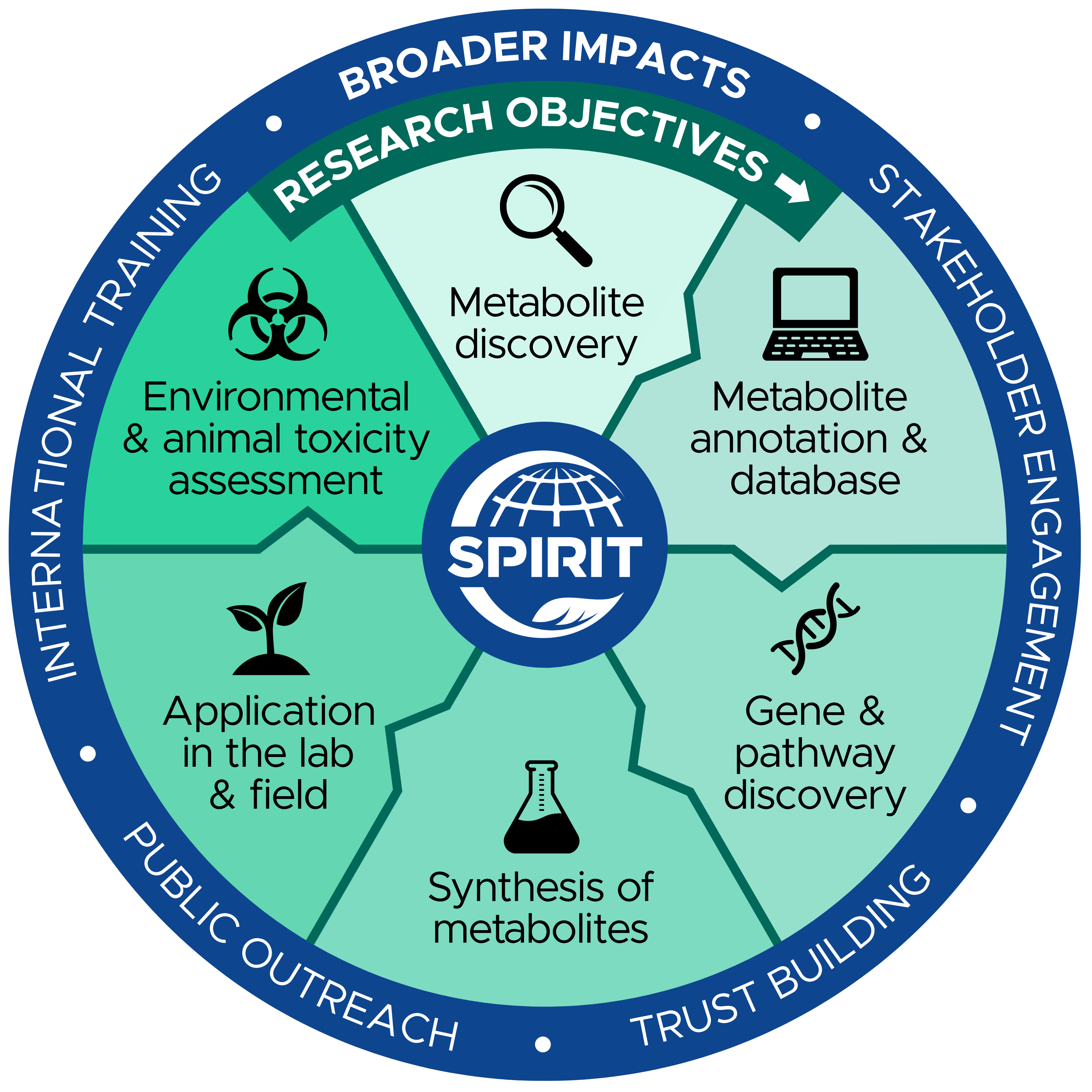
Our mission is to discover bioactive compounds that enhance plant and soil health while engaging industry partners and stakeholders to co-develop technology, promote sustainability, and build public trust. Through international collaboration, C-SPIRIT will train future leaders in the bioeconomy and green agriculture sectors, creating resilient systems that support the world’s food supply.
Breaking News
Congratulations to C-SPIRIT Member Dr. Sean Robertson on Earning His PhD!
October 27th, 2026
Congratulations to C-SPIRIT member Dr. Sean Robertson on earning his PhD from the University of Manitoba! Sean completed his doctoral research in Dr. Olivia Wilkins’ lab, with a thesis titled “Spatial Organization of Gene Regulation in Rice Leaves Under Environmental Stress.” His work investigated how gene regulation shapes rice responses to environmental challenges, contributing to our understanding of the molecular mechanisms underlying plant stress tolerance. His research supports C-SPIRIT’s mission to advance plant resilience and develop strategies for improving crop performance under changing environmental conditions. We wish Sean continued success in his future endeavors!
New Publication from Sun Moon University C-SPIRIT Members!
October 26th, 2026
Congratulations to C-SPIRIT members So-Ra Han, Jun Hyuck Lee, and Tae-Jin Oh as well as their collaborator Anamika Khanal on their new publication “Genomic and Phenotypic Analysis of Antarctic Marine Cryobacterium sp. PAMC25264” in Current Microbiology! The researchers investigated a bacterium isolated from Antarctic seawater, identifying 125 carbohydrate-active enzymes and genes associated with nitrogen metabolism and stress adaptation. Laboratory experiments demonstrated its ability to reduce nitrate and break down starch and cellulose at temperatures as low as 4°C. These findings expand our understanding of how microorganisms function in extreme cold environments and the biological mechanisms underlying stress resilience. Click here to read the full article!

